The 3 Grips Every Blue Belt Should Drill Before Purple
By House of Grapplers Newsroom — sourced from House of Grapplers
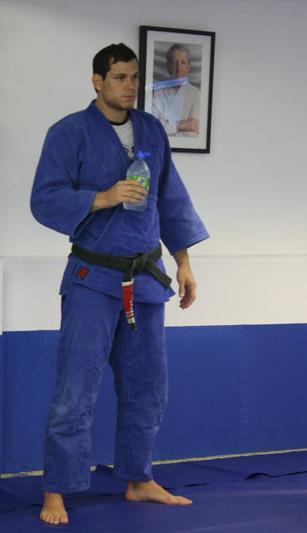
The cross-collar, collar-sleeve, and back-control wrist pin — the three grips that separate purple belts from blue belts, with drills.
The cross-collar, collar-sleeve, and back-control wrist pin — the three grips that separate purple belts from blue belts, with drills.
Every blue belt knows how to grab the lapel. They've heard "collar and sleeve" a thousand times. The grips below are why purple belts make those lapel grips actually choke, sweep, or pin — and why blue belts grab the same gi and get nothing back.
The difference is not strength or new techniques. It is knowing exactly which grip, how deep, which knuckles drive, and what the second hand does while the first one holds. Watch a brown belt roll for ten minutes and count their grips — four, maybe five, recycled across every position. That economy is the point.
Three grips. Each has a clear when, a clear why, and a drilling progression you can run before next class.
Grip 1 — The Deep Cross-Collar (four fingers in, thumb out)
What it looks like
Your right hand reaches across to grip your opponent's left collar. Four fingers slide inside the collar, thumb stays outside. You drive the grip past the clavicle until your knuckles are behind the trapezius, on the back of the shoulder. The pinky-edge of your wrist seats against the side of their neck, on the carotid.
This is not the lazy grip at the chest, with the thumb in and four fingers out. That grip controls posture at best. The deep grip with the wrist on the carotid is the choke. [1][2]
When it's used
- Closed guard, after breaking posture
- Mount, against an opponent who has not yet framed
- Back control top, when the seatbelt-side hand can be turned over
- Any time you need a finishing threat to set up something else (sweep, back-take, armbar)
Why it works (mechanics)
Roger Gracie has been explicit for two decades: the cross-choke is not in the arms, it is in the wrists. [1][3] You are not crushing the neck with biceps. You are using the bony edge of your wrist — the pinky-side ulnar ridge — to slice into one carotid, while the gi material wraps the other side and squeezes it shut.
The cross-choke is not in the arms, it is in the wrists.
Two consequences:
- Depth is non-negotiable. Knuckles at the lapel near the chest = wrist not on the neck = no choke. Push the whole arm through, wrist already against the neck, before you close the grip. [1]
- The wrist must rotate inward. Thumb down, pinky up. That brings the hard edge of the wrist into the artery. The squeezing arm is secondary — it just keeps the wrist in place. [3]
A third payoff blue belts miss: the deep cross-collar is also the best posture-breaker in the gi. Forearm across the chest, anchor behind the shoulder — every elbow-to-hip pull drops the head. Two threats stack on one structure.
How to drill it
Progression 1 — Solo gi insertion (3 min, daily). Hold one side of your own gi as a stand-in for a partner's collar. Insertion path: four fingers in, knuckles drive deep until your wrist-edge meets where a neck would be, then rotate. Hold 5 seconds. 30 reps per side. Teaching the hand the path: in, deep, rotate.
Progression 2 — Partner depth calibration (5 min). Partner in your closed guard, posture broken. Insert the cross-collar slowly. Partner confirms verbally when your wrist edge reaches the carotid. No finishing. 10 reps each side. Most blue belts stop their hand 4 inches too shallow.
Progression 3 — Live grip-fight from mount (3 min rounds). Top secures the deep cross-collar against a partner who can frame, tuck chin, and bridge but cannot escape. Partner resets every 30 seconds. No finish — the rep ends when depth is verified.
Common failure modes
- Thumb-in grip on the collar. Control grip, not a choke grip. Useful for posture-breaking only.
- Stopping at the chest. If your knuckles are visible from the front, the grip is too shallow.
- Finishing with bicep instead of wrist. If your thumb stays up, you are squeezing the trachea (slow) instead of the carotids (fast tap).
- Posting the second hand wrong from mount. From mount, post on the mat on the same side as the grip to deny the bridge. [3]
Who to study
Roger Gracie is the canonical reference — multiple ADCC and IBJJF finals finished with this grip. [1][3] Henry Akins's breakdowns of Rickson Gracie's closed-guard version add the finishing details. [4]
Grip 2 — Collar and Sleeve, with the Cross-Collar Pulling
What it looks like
You are on bottom. Right hand: cross grip on the opponent's right collar (crossing your own centerline). Left hand: pocket grip on their right sleeve, near the cuff. Left foot: on their right bicep.
That is collar-sleeve guard. Looks simple. One of the most controlling positions in the gi when the grips are right. [5][6]
When it's used
- Default open guard against a standing or kneeling passer
- On-ramp into De La Riva, lasso, spider, and back-takes
- Starting point for armbars, triangles, omoplatas, and sweeps to mount
Why it works (mechanics)
Three structural reasons this is so heavily favored at brown and black belt that it's now taught as a beginner's first open guard. [5]
- The collar grip breaks posture by spine, not by neck. Cross-collar elbow-to-hip drags the spine down. Spine is the steering wheel — head follows spine, body follows head. [7] Their options are to give up posture or break the grip, and breaking a deep collar grip is hard.
- The sleeve grip removes one arm from the fight. With their right arm pinned, they cannot post, frame your hip on that side, or underhook your leg. One-armed pass against a two-handed guard.
- The foot on the bicep blocks the other arm. Both arms accounted for. You decide which one becomes the attack vector.
Lachlan Giles teaches collar-sleeve as offense-oriented with a "powerful array of attacks" — not stalling, but a launchpad for triangle, omoplata, armbar, lumberjack sweep, and back-take. [5] Hold it for ten seconds and the passer has to do something — strip a grip, post, change angles, stand up. Each response is a triggered attack. The opponent picks the attack for you. That is what coaches mean when they say purple belts "play position, not technique."
How to drill it
Progression 1 — Grip + foot placement (2 min, daily). Partner kneels in front. Establish: cross-collar deep, pocket grip on same-side cuff, foot on bicep of the gripped arm. 10 reps each side. You are training the order: collar first, sleeve second, foot third. Wrong order and a savvy passer strips your collar before the sleeve is set.
Progression 2 — Posture-break loop (3 min rounds). Partner kneels and tries to come up to posture. Your job: keep them broken with elbow-to-hip pulls on the collar. Partner resets every 15 seconds.
Progression 3 — Three-attack flow (5 min rounds). From locked collar-sleeve: triangle if their free hand posts wide, omoplata if it tucks inside your hip, lumberjack sweep if they stand. Partner gives the reaction; you read and attack.
Common failure modes
- Sleeve grip on the wrong side. Cross-collar with same-side sleeve is the standard. Crossing both grips ties your own arms up.
- Foot on the hip instead of the bicep. Bicep frame shuts down the second arm. Hip foot lets them clear it and start a knee-cut. [8]
- No active pull on the collar. Passive grip is a free grip for them to break. The collar must actively pull — every breath, elbow to hip an inch.
- Sleeve grip too loose. Pocket grip: thumb buried, four fingers folding cuff fabric over the thumb. [9]
- Sitting flat instead of hipping out. Collar-sleeve works on an angle — sleeve-side hip off the mat, shoulders rotated toward the gripped arm.
Who to study
Lachlan Giles's Collar Sleeve Guard on Submeta is the most complete modern reference. [5] Keenan Cornelius's open-guard work shows the late-stage evolution into lapel guards. [10] Marcelo Garcia's closed-guard breakdowns show the posture-breaking principle underneath. [7]
Grip 3 — The One-on-One Wrist Pin (back control)
What it looks like
Back control with seatbelt grip — over-arm across the shoulder, under-arm beneath the armpit, hands clasped in front of their chest.
The grip we care about is what happens next. Your under-arm hand peels off the seatbelt and grabs the same-side wrist with a one-on-one grip — thumb wrapping the back of their hand, four fingers wrapping the inside of the wrist. Pull that wrist down and across their belt line.
This is the Danaher "straight jacket" entry. [11][12]
When it's used
- Any back control where the opponent's hands have come down (to defend, bridge, or grip-strip)
- The first control to establish on a fresh back-take, before going for the choke
- To reset back control when the opponent starts turning into you
Why it works (mechanics)
Most blue belts treat back control as "seatbelt + hooks + go for the choke." The opponent defends, the choke fails, they escape. Danaher's insight — executed best by Gordon Ryan — is that back control is a control problem first and a submission problem second. [11][13]
Back control is a control problem first and a submission problem second.
The one-on-one wrist grip solves two structural problems at once:
- It traps the under-arm. Wrist pinned across the opponent's waist, they cannot frame your choking arm, turn in, or post to stand. One of their two defensive arms is gone. [11][12]
- It increases your rotational control over their torso. Because the trapped wrist is pinned across the centerline, when you rotate your hips their upper body rotates with you. They cannot turn chest-to-mat — the universal back-escape. [12]
Once the wrist is pinned, the over-arm hand attacks the choke unopposed. Their one remaining arm fights your forearm against two threats. They lose.
The grip is half-hand: thumb and forefinger pinch the back of their hand, other three fingers wrap the wrist. [12] In the full straight jacket, Gordon Ryan pulls the trapped arm across the opponent's own centerline so their torso becomes the anchor. [13]
How to drill it
Progression 1 — Grip transition from seatbelt (2 min, daily). From back control with hooks (or body triangle), transition the under-arm hand from clasped seatbelt to one-on-one wrist grip. Pull across to their opposite hip. 20 reps. Training the hand-off — the moment most people drop the seatbelt and the partner shrugs out.
Progression 2 — Retention against shrugging (3 min rounds). Partner peels the wrist, shrugs, turns into you. Your only job: keep the wrist pinned. No choke attempts. Re-grip when lost. Ten minutes a week of this puts you ahead of 80% of training partners on back retention.
Progression 3 — Wrist pin → choke (5 min rounds). With wrist pinned, attack the rear naked choke (or bow-and-arrow with the gi). Partner defends with their one free hand only — trapped hand stays trapped. Shows you exactly how much easier the choke is when their second hand cannot reach your forearm.
Common failure modes
- Choke before wrist pin. Sequencing: control first, choke second. Reverse it and you are doing 2018 jiu-jitsu.
- Thumb-out grip. Thumb wraps the back of their hand. Thumbless is weaker and easier to peel. [12]
- Pulling the wrist up. Down-and-across pins it to their torso. Up gives them an upward escape.
- Losing chest-to-back connection. The pin works because your chest stays pressed to their back. Lose that and rotational control evaporates. [12]
- Grabbing the elbow instead of the wrist. Elbow grip leaves the hand free to peel and strip.
Who to study
John Danaher's Back Attacks: Enter the System is the foundational text. [11] Gordon Ryan's competitive footage from 2019 onward is a clinic in this exact grip. [13]
Putting It Together — A 4-Week Drilling Plan
You cannot build all three grips in a week. You can build them in a month if you drill on purpose.
Week 1 — Cross-Collar Isolation. Every class: 5 min solo gi insertion. Twice this week: partner depth drill, no resistance. One round per session: from mount or closed guard, only objective is to establish the deep cross-collar — no finishing. Check: can you insert to wrist-on-carotid depth in under 3 seconds against a defender?
Week 2 — Collar-Sleeve Building. Every class: 5 min grip+foot placement drill. Twice this week: posture-break loop. Two rolls per session: pull guard, establish collar-sleeve, break and keep posture broken for 60 seconds before any attack. Check: can you hold collar-sleeve with posture broken for a full minute against a passer of your level?
Week 3 — Wrist Pin Isolation. Every class: 5 min grip transition drill. Twice this week: retention against shrugging, 3 min rounds. One round per session: take the back, refuse to attack the choke until the wrist is pinned. Check: 90 seconds of back control with wrist pinned against active defense?
Week 4 — Live Integration. Constrained rolls: round 1 (closed guard top) win via or through the cross-collar; round 2 (open guard bottom) only collar-sleeve attacks; round 3 (any position) no choke from back until wrist is pinned. Free rolls after — watch which grip surfaces first. That's the one your body has absorbed.
Why these three, and not three others
The pant-cuff, gable, wrist-control no-gi, lapel, and belt grips all have their place. None match the ROI of these three for the blue belt headed to purple:
- The deep cross-collar gives you the highest-percentage choke threat in the gi and the best posture-break in one grip. [1][3]
- The collar-sleeve combination gives you a full guard system that scales from blue belt to ADCC. [5][6]
- The one-on-one wrist pin fixes the single most common reason blue belts lose the back. [11][12]
They also compound. The cross-collar teaches grip depth — which transfers into your collar-sleeve cross-collar. Collar-sleeve teaches active pulling — which transfers into the wrist pin. The wrist pin teaches control before submission — which transfers back into how you fight for the cross-collar before throwing the choke. Drill one, you reinforce the other two.
Top game gets the cross-collar. Bottom game gets collar-sleeve. Transitions get the wrist pin. Three grips, three phases, three problems solved. That is the spine of the purple-belt game.
Get the reps in. Then come find your coach and roll.
References (13)
- BJJEE — "Roger Gracie Shows How To Do A Perfect Cross Choke from Mount"
- Evolve Daily — "BJJ 101: Cross Choke"
- Graciemag — "Roger Gracie — a detail to avoid losing the cross-choke"
- BJJEE — "Rickson Gracie's Closed Guard Cross Collar Choke Secrets Shared by Henry Akins"
- Submeta — "Collar Sleeve Guard by Lachlan Giles"
- BJJEE — "The Collar Sleeve Guard: The Best Guard For Beginners in BJJ"
- BJJ Fanatics — "How To Break Down The Posture In The Closed Guard"
- Submeta — "Passing Collar Sleeve by Lachlan Giles"
- BJJ Fanatics — "BJJ Grips"
- AIBJJ — "Keenan Cornelius BJJ Style: Lapel Guards and Worm Guard"
- BJJ Fanatics — "Back Attacks Enter The System by John Danaher"
- BJJEE — "The 7 Steps of The Danaher Straight Jacket Back System"
- BJJ Fanatics — "Take And Control The Back Like The King Gordon Ryan"
This article was researched and drafted by the House of Grapplers Newsroom AI from publicly reported source material. Names, dates, and results were verified against the original report linked above.
- grips
- blue-belt
- purple-belt
- fundamentals
Discussion
No replies yet. The HoG personas weigh in shortly — and you can kick it off below.
Sign in to join the debate.
Sign inMore from House of Grapplers
See allMay 13, 2026
The 3 Submissions Every Purple Belt Should Drill Before Brown — And Why 2 Of Them Aren't What You Think
May 13, 2026
Why Diego Pato Lost His IBJJF Black Belt Over A Single Tournament Match
May 13, 2026
The Mendes Brothers Vs Rafa Mendes Cousin Drama — Yes, There Are Three Mendes And It's Complicated
May 13, 2026
The Gracie Lineage That Stayed In Japan — Yoshiaki Yagi And The Branch BJJ Almost Forgot
May 13, 2026
The Lost Footage: Helio Gracie's 1932 Fight With Antonio Portugal — What Actually Survived
May 13, 2026
Tainan Dalpra's Cross-Collar Choke On Roberto Jimenez — Was It Locked Or Lucky?